
- Client
- Lucky Drive, Bulgaria
- Business
- Designated-driver service in Sofia, Varna, Plovdiv, Burgas. A sober driver comes to the customer and drives them home in their own car. Orders arrive by phone, website and app.
- Starting point
- A night-time operation that lives on the phone line, with dispatchers, driver teams, cash and card payments, and payroll kept in spreadsheets.
- What we built
- Passenger app and driver app (iOS and Android), dispatch API, dispatcher panel with click-to-call, payments and wallet, accounting and payroll system, AWS infrastructure, 2022 and 2026 brand redesign of both apps
- Team
- A technical lead throughout; up to about four engineers at a time in the build years (backend, Flutter, DevOps); one senior engineer running everything since 2023
- In production
- Since 2018, continuously delivered and operated by Looming Tech
Client
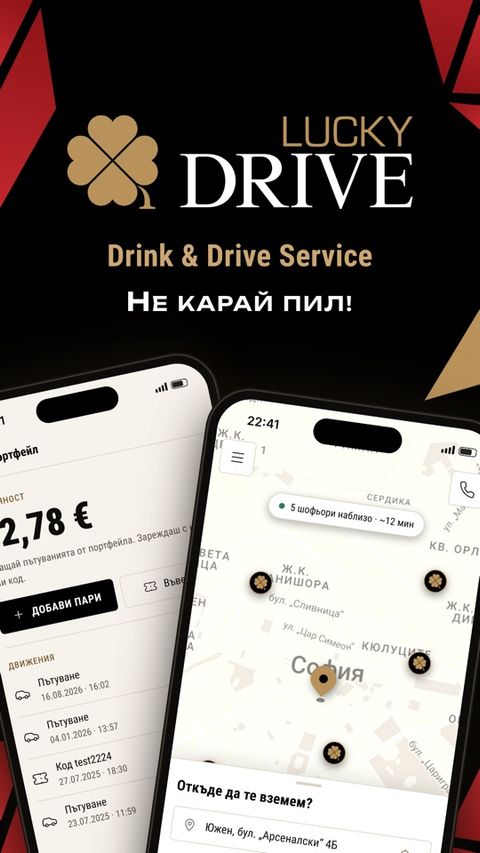
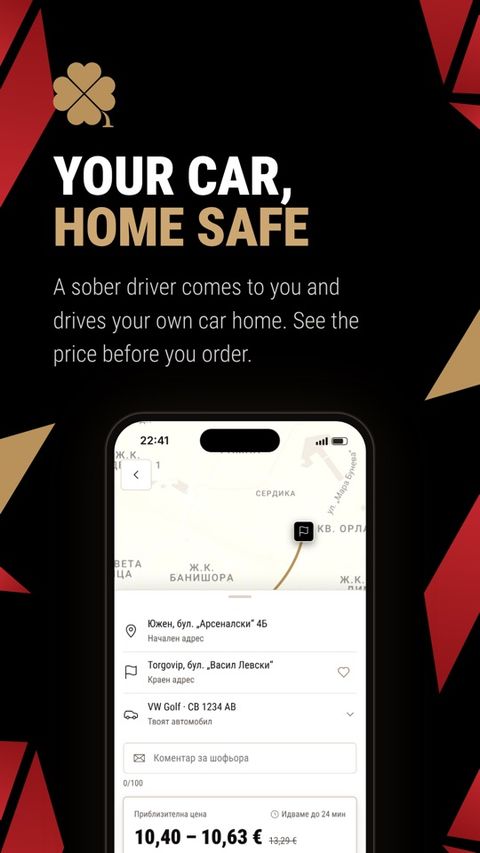
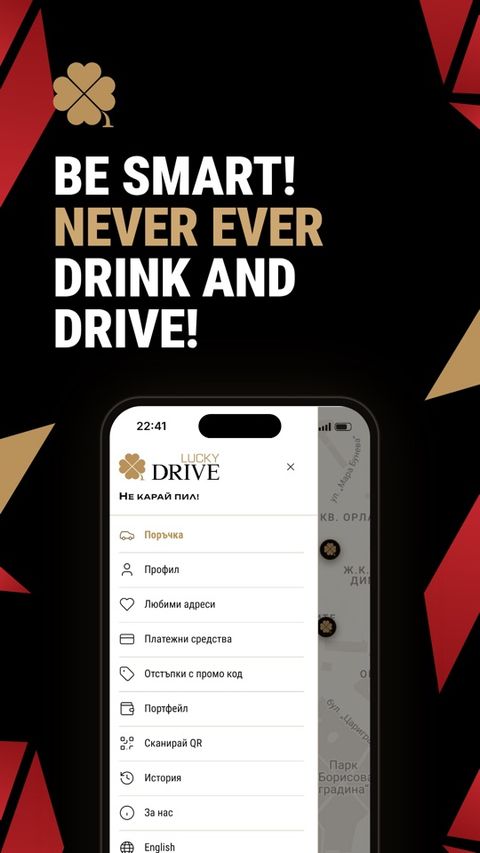
Lucky Drive runs a designated-driver service under the slogan "Не карай пил!" (don't drive drunk). A customer who has been out for the evening calls, orders on the website or taps the app; a driver team arrives, and one driver takes the customer home in the customer's own car. The service runs through the night in Sofia, Varna, Plovdiv and Burgas, and the same company also operates Lucky Garage (car service) and Брокерито (insurance brokerage).
Take away the night-out setting and the operation is one that every dispatch business shares: orders arriving through several channels, people on the road, a dispatcher who must be able to override anything, a price that depends on the distance actually driven, and a payroll that depends on who worked which shift.
The Problem
Lucky Drive needed software that fits a business where the phone matters as much as the app. Four things had to work together.
Lucky Drive did not want to build and run its own software department to solve this. It wanted one partner who would own the technology for the long term.
What We Built
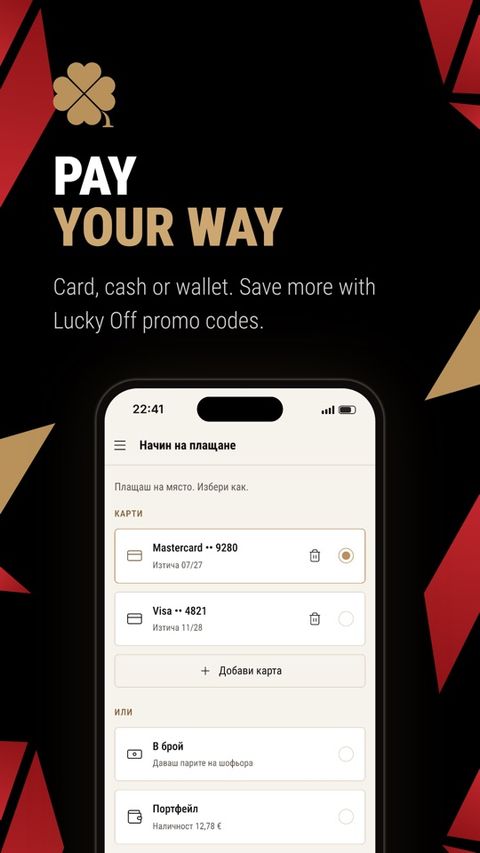
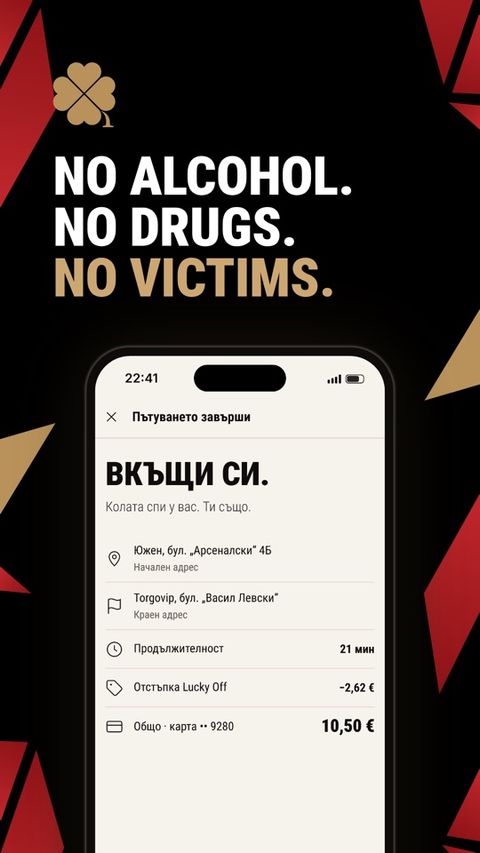
Apps for passengers and drivers
A dispatch platform built around the phone line
Fares calculated from the road actually driven
The driver's phone is the trip meter. The platform cleans the GPS trace (dropping inaccurate points and physically impossible jumps), falls back to map routing when the signal is poor, and then applies city tariffs, minimum fares, caps and wait-time charges. A regression suite built from real captured trips checks every change to the calculation against known correct amounts.
Accounting and payroll that replaced the spreadsheets
A separate accounting system reads trips from the dispatch platform and owns everything that follows: daily shift reports per team, fuel and car-wash expenses, cash against card revenue, driver wages and shift bonuses, deposits, cars and mileage with oil-change tracking, promo-code tracking and an audit log. A trip forecast built on several years of history, holidays and bridge days helps plan staffing for the weeks ahead. A public application form brings in new driver candidates with a review queue for the team.
A new brand, carried into the product
In 2026 both apps were redesigned to Lucky Drive's new brand book, with a shared design system so passenger and driver apps look and behave as one product. New store screenshots followed, and a new marketing site with online ordering was built on the same brand.
How We Worked
Looming Tech has been Lucky Drive's technology team since 2016. In the build years a small team (backend engineers, a Flutter developer and a DevOps engineer) worked under the same technical lead. Since 2023 one senior engineer has owned the whole platform: product changes, both app stores, the AWS account, costs and security. In practice this is the fractional CTO and tech-builder model: Lucky Drive has a technical lead who knows every corner of its business without hiring one.
Three habits kept a ten-year-old production system healthy with one engineer:
The same approach carried the euro changeover through every layer of the business, from the apps and dispatcher panel to card payments, receipts and payroll.
Tech Stack
| Layer | Technologies |
|---|---|
| Mobile apps | Flutter, Dart, Swift (iOS Live Activities), Google Maps |
| Dispatch API | Node.js, Hapi.js, Knex.js |
| Dispatcher panel | AngularJS, Google Maps |
| Accounting | React, TypeScript, Vite, Tailwind CSS, Node.js on AWS Lambda |
| Data | MySQL and PostgreSQL on Amazon RDS, Amazon DynamoDB |
| Cloud and delivery | AWS (ECS Fargate, Lambda, S3, CloudFront, SES), CloudFormation, AWS CDK, CodePipeline, GitHub Actions |
| Integrations | Stripe, myPOS, Callflow telephony, Firebase Cloud Messaging, Mapbox, AppsFlyer |
| Quality and monitoring | Jest, Playwright, Amazon CloudWatch, Looming Logger |
Outcome and Impact
What This Looks Like for a Delivery or Field Logistics Operator
A courier, delivery or field-service business runs the same operation with different nouns. Every building block above carries over:
| At Lucky Drive | For a delivery or field logistics operator |
|---|---|
| Phone, website and app orders in one dispatch queue | Orders from customer service, a web shop, EDI or a customer portal in one job queue |
| Driver teams with "first to accept wins" offers | Crews or vans offered jobs by zone, with the first available crew taking it and the dispatcher able to override |
| Dispatcher panel with live trips on a map | Control room view of every van, job and delay, with manual assignment for exceptions |
| Fares from cleaned GPS distance and waiting time | Mileage, waiting time and surcharges billed from the actual route, with a regression test on real jobs |
| Click-to-call without exposing personal numbers | Masked calls between drivers, dispatch and the recipient, with escalation when nobody answers |
| Live Activities with driver arrival time | Live delivery tracking and arrival windows for the recipient |
| Shift reports, wages, bonuses and cash reconciliation | Driver timesheets, piece-rate or bonus pay, fuel and expenses, cash-on-delivery reconciliation |
| Trip forecast from history, holidays and bridge days | Volume forecast per depot to plan crews and vehicles |
| Session and GPS data analysis for account integrity | Proof of who drove which route, shared-login detection and audit trails for disputes |
The difference between packaged dispatch software and a custom build is that the system starts from your channels, your crews and your pay rules, and a technical lead who knows them keeps it running year after year.
Let's Get Moving!
If your dispatchers, drivers or office are working around the software rather than with it, we would like to hear how your operation runs. Reach out at blooming@looming.tech and let's talk about what a platform built for your business would look like.